
A Student’s Guide to Reliable Research: Check Sources, Understand Evidence and Avoid Misinformation
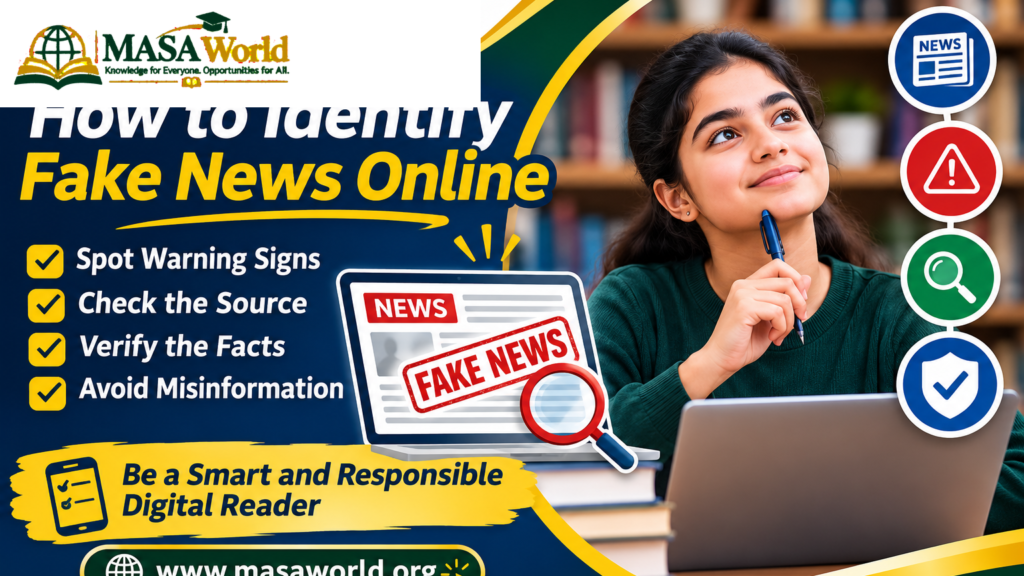
Students encounter information through search engines, social media, videos, AI tools, news websites and conversations. Not all of it is accurate or complete. Reliable research means checking who created a claim, when it was published, what evidence supports it and whether the original context has been preserved. This guide gives students and families a practical method for evaluating information before using it in assignments or sharing it.
Why this topic matters
A focused question helps you decide what information is relevant. Instead of searching ‘climate’, ask ‘What are the main causes of urban heat and which local measures can reduce it?’ Write down what you already know and what evidence would answer the question. This prevents a search from becoming an endless collection of unrelated links.
Begin with a focused question that defines the subject, audience, location and time period. Instead of searching only “climate”, ask “Which local measures reduce extreme heat in urban neighbourhoods?” Note what you already know and what evidence would answer the question. This keeps your search relevant and helps you recognise when you have enough information.
Identify Who Created the Information
Look for the author, organisation, expertise and purpose of a page. Is it a government notice, research paper, news report, opinion piece, commercial promotion or personal post? Each type can be useful for a different purpose, but it should not be treated as interchangeable. Check whether the source has a correction policy and whether it explains how information was gathered.
Check the author’s name, expertise, organisation, purpose and evidence. A government notice, research paper, news report, company blog and personal post serve different purposes. Look for editorial standards, funding or conflicts of interest, and an explanation of how information was gathered. A professional-looking website alone does not prove a claim is accurate.
Check Dates and Context
An accurate article from several years ago may not describe a current rule or event. Check publication and update dates, the location involved and the period the claim refers to. A screenshot without its original context can be misleading. When studying history, older sources may be important, but their date and perspective need to be understood.
Check publication and update dates, location and period covered. Rules, prices, health advice, technology features and current events can change quickly. Older sources may still be useful for history, but should not be presented as current without checking newer evidence. Screenshots and copied posts can lose the context that explains when or where a statement was made.
Trace Claims to Primary Sources
For important claims, look for the original report, law, data release, research paper, speech or official announcement. Secondary reporting can help explain a subject, but it may simplify details. Read beyond a headline and confirm that the source actually supports the statement being repeated. If a source cannot be located, treat the claim cautiously.
For important claims, locate the original report, dataset, law, research paper, speech or official announcement. Secondary reporting can explain a subject, but may simplify details. Read original material in context and confirm that it supports the exact statement being repeated. If the original source cannot be found, describe the claim as unverified rather than presenting it as fact.
Evaluate Evidence and Numbers
Ask how data was collected, how many people or cases were included, what comparison is being made and what limitations are stated. Correlation does not automatically prove cause. Percentages can sound dramatic without showing the starting number, and a graph can exaggerate change through its scale. Look for methods and uncertainty rather than relying on a single striking statistic.
Ask how evidence was collected, how many people or cases were included, what comparison was made and what limitations are acknowledged. Correlation does not automatically prove cause. Percentages can sound dramatic without a starting number, and graphs can exaggerate change through their scale. Look for methods, sample details, uncertainty and whether other credible studies reach similar conclusions.
Verify Images and Videos
Images can be old, edited, cropped or presented as if they show a different event. Search for the earliest available source, compare details with trusted reports and inspect the surrounding context. AI-generated content and manipulated media make visual certainty less reliable. If you cannot verify an image, do not describe it as confirmed evidence.
Images and videos can be old, edited, cropped or presented as if they show another event. Search for the earliest available version, compare details with trusted reports and check the original caption and date. AI-generated media and manipulated clips make visual certainty less reliable. If an image cannot be verified, do not describe it as confirmed evidence or share it without context.
Compare Independent Sources
For major or disputed claims, seek confirmation from multiple credible sources that are not merely repeating the same original post. Different outlets may share the same wire report, so count the underlying evidence rather than the number of websites. If sources disagree, describe the disagreement accurately and explain what remains uncertain.
For major or disputed claims, compare credible sources that do not merely repeat the same original post or press release. Several websites may rely on one wire report, so count independent evidence rather than pages. If sources disagree, explain what is known, what is disputed and what remains uncertain. Good research describes disagreement instead of hiding it.
Use AI and Search Tools Carefully
Search engines rank results according to many factors; the first result is not automatically the best. AI summaries can help generate search terms or explain unfamiliar language, but they may omit nuance or invent details. Open original sources, check quotations and citations, and follow your school’s rules on AI-assisted work. You remain responsible for what you submit.
Search engines rank pages using many signals; the first result is not automatically the most accurate. AI summaries can suggest search terms or explain unfamiliar language, but may omit nuance or invent details and citations. Open original sources, check quotations and links, and follow your school’s rules on AI-assisted work. You remain responsible for the accuracy and originality of what you submit.
Cite and Organise Your Research
Keep a record of titles, authors, dates, publication names and links while researching. Use the citation style required by your teacher or institution. Distinguish direct quotations from paraphrases and give credit for ideas, data and images. Good notes help you avoid accidental plagiarism and make it easier for others to verify your work.
Record titles, authors or organisations, dates, publication names, URLs and access dates while researching. Keep notes in your own words and mark direct quotations clearly. Use the citation style required by your teacher or institution. Give credit for ideas, data and images, not only copied sentences. Good notes make it easier to verify claims, avoid accidental plagiarism and return to useful material later.
Conclusion
Reliable research is a process of asking, tracing, comparing and checking. Slow down when a claim triggers strong emotion, promises certainty or urges immediate sharing. Look for evidence, preserve context and be honest about what you do not know. These habits support better schoolwork and more responsible participation in public life.
A simple research-check routine
- Write one focused question and identify what evidence would answer it.
- Find the original source and check its author, date, purpose and context.
- Evaluate methods, numbers, images and possible limitations.
- Compare independent, credible sources and record disagreements.
- Keep accurate notes, cite material and explain what remains uncertain.
Consistency is more useful than perfection. Avoid exaggerated promises, check facts before sharing them and seek professional advice where the issue is specialised or high-stakes.
Frequently asked questions
Where should I begin?
Start with a focused question, then look for an authoritative or original source. Record the author, organisation, date and link as soon as you find useful material.
How can I avoid common mistakes?
Do not rely on headlines, viral posts or a single search result. Check the original evidence, read beyond the headline, compare independent sources and be careful with statistics and images.
How will I know my research is reliable?
You should be able to trace important claims to sources, explain why those sources are suitable, cite them accurately and describe any gaps or uncertainty that remain.
Final thoughts
Good research is not about collecting the largest number of links. It is about building a clear answer from relevant, verifiable evidence and being honest about what the evidence can and cannot show. Practise these checks regularly, ask for help when a subject is specialised and correct your work when stronger information becomes available.
Editorial note: This is general educational information, not a substitute for professional advice where specialised guidance is required.
A seven-step research workflow you can use for any assignment
Reliable research becomes easier when you follow the same sequence each time. The steps below work for a school assignment, college project, presentation, community report or personal fact-check. You do not need to use every tool for every question; choose the checks that match the importance and complexity of the claim.
- Turn the topic into a question. Define what you need to know, for whom, where and for which period. A focused question makes it easier to recognise relevant evidence.
- List the information you need. Decide whether you need a definition, a current rule, a comparison, a historical explanation, a statistic or expert opinion. Different questions require different sources.
- Search broadly, then narrow. Use a few carefully chosen search terms. Add a location, year, organisation or file type when useful. Search for the original document as well as explanations of it.
- Evaluate each important source. Check author, organisation, date, evidence, purpose, funding and context. Record strengths and limitations rather than labelling a source simply “good” or “bad”.
- Cross-check key claims. Compare independent sources and trace important numbers or quotations back to their origin. Two websites repeating the same press release are not necessarily two independent confirmations.
- Organise notes and citations. Record the source details at the same time you take notes. Mark direct quotations clearly and separate them from your own summary and interpretation.
- Write, review and disclose. Explain what the evidence supports, what remains uncertain and where sources disagree. Follow your school or organisation’s rules for AI assistance, collaboration and citation.
Source evaluation: a practical comparison table
| What to check | Stronger evidence may look like | Warning signs |
|---|---|---|
| Author and expertise | Named author or accountable organisation with relevant experience | No author, invented credentials or unclear responsibility |
| Evidence | Original data, transparent methods, documents or traceable references | Big claims supported only by anonymous posts or vague wording |
| Date and context | Clear publication date, location and period covered | Old material presented as breaking news or current policy |
| Purpose | Purpose and funding are visible; limitations are acknowledged | Hidden sales motive, sensational framing or undisclosed conflicts |
| Corroboration | Independent sources reach compatible conclusions from evidence | Many sites copy one unverified claim or cite one another in a loop |
| Corrections | Transparent corrections, methodology and contact details | Errors quietly disappear or challenges are dismissed without evidence |
Real-life examples: how to check a claim
Example 1: A viral health or nutrition claim
Suppose a social media post says that one food can prevent every illness. Do not share it because it has many likes or an impressive-looking graphic. Identify the exact claim, look for evidence from recognised public-health organisations and review whether the statement is supported by systematic research. Check the population studied, the amount consumed, the outcome measured and whether the claim has been exaggerated. Health decisions should be discussed with a qualified professional; a school research exercise is not a personal diagnosis.
Example 2: A current-affairs headline
If a headline says that a new rule has come into force, identify the country, department, date and people affected. Search for the official notification or order and read its effective date, scope and exceptions. A news report may provide useful context, but the official document is usually the best place to confirm the wording. If the rule is only proposed or announced for a future date, do not describe it as already active.
Example 3: A photograph shared as breaking news
Look for the earliest available version of the image and search for clues such as signs, weather, uniforms, landmarks and language. A reverse-image search can reveal whether the same photograph appeared years earlier or in a different country. Compare the image with independent reporting and official updates. A match in a reverse-image tool is a lead, not proof by itself; images can be cropped, edited or reused in ways that search tools do not detect.
Example 4: A statistic used in a presentation
When you see a percentage, ask: percentage of what group, measured in which year, in which place, using what method? Check the denominator and sample size. A statistic about a small survey cannot automatically represent an entire country. If a chart begins its vertical axis above zero or leaves out important years, its visual impression may exaggerate a difference. Explain the limitation instead of copying the number without context.
Checking images, video and AI-generated content
Visual content can be authentic but miscaptioned, selectively edited or presented from a different time and place. Generative AI can also create realistic-looking scenes that never happened. Do not rely on a single visual clue or an automated detector to decide whether something is real. Examine the original upload, surrounding context, other available footage and independent reporting. If a visual is central to your conclusion, explain what you could and could not verify.
Useful checks include searching for earlier appearances of an image, comparing different frames from a video, checking whether landmarks and weather fit the claimed location, and finding the original account or organisation that published it. Metadata can sometimes help, but social platforms often remove it and metadata can be altered. A detector result is not definitive evidence of authorship or manipulation.
Using AI as a research assistant—not as your source
AI tools can help you brainstorm search terms, simplify difficult language, create an outline, compare notes you provide or suggest questions to investigate. They can also invent references, misquote a real source, mix old and new information or state an uncertain answer confidently. An AI-generated citation is not evidence until you open the original publication and confirm that it exists and supports the claim.
Try prompts that make verification part of the task:
- For planning: “Help me turn this topic into five focused research questions. Do not answer them yet; suggest what kind of evidence would be needed for each.”
- For evaluating: “Review this source description. List its author, date, purpose, evidence and possible limitations. Separate what is stated from what you infer.”
- For note organisation: “Organise these notes into themes. Keep direct quotations clearly marked and do not add facts that are not in my notes.”
- For fact-checking: “List the claims in this paragraph that need verification and suggest the kind of primary source that could confirm each one.”
Never ask an AI tool to fabricate references or treat its output as a substitute for reading. Do not enter passwords, private student records, health information, personal contact details or confidential documents into an unapproved service. Follow your institution’s academic-integrity and disclosure rules. For more guidance, read MASA World’s AI Literacy for Everyone and complete beginner’s guide to Artificial Intelligence.
Research guidance for students, parents, teachers and professionals
- Students: begin with the assignment question and marking criteria. Use books, library databases, official sources and credible reporting. Keep your own notes, cite every borrowed idea and ask your teacher when collaboration or AI use is unclear. Do not confuse a polished paragraph with a well-supported argument.
- Parents and caregivers: help children pause before sharing dramatic posts. Ask who published it, when it happened and what evidence is available. Model checking together instead of simply saying “the internet is wrong”. For younger children, choose age-appropriate sources and supervise searches.
- Teachers: teach source evaluation through examples that students can investigate. Ask learners to compare a headline with its original source, identify missing context and explain why a source is suitable for one question but not another. Make citation expectations and AI rules explicit.
- Young people: be careful with forwarded messages, edited clips, influencer promotions and urgent requests for money or personal information. Verify requests through a separate trusted channel. Do not share someone’s image, location or private details without permission.
- Professionals and community organisations: keep an evidence trail for decisions. Record the date accessed, source version, assumptions and approval. For public claims, funding proposals or reports, verify numbers at source and have a second person review high-impact statements.
A simple research notes and citation template
| Field | What to record |
|---|---|
| Research question | The exact question your work is answering |
| Source title and author | Full title and person or organisation responsible |
| Publication date | Date published or last updated |
| Source type | Official notice, research paper, book, news report, interview, dataset |
| Key evidence | Page, section, table, quotation or data point that supports your note |
| Limitations | Missing context, sample limits, possible bias or uncertainty |
| Access details | URL, DOI, page number and date you accessed it |
| Your own note | Paraphrase in your own words, clearly separated from quotations |
Use the citation style required by your school, college, publisher or organisation. If no style is specified, choose one consistent method and include enough detail for another person to locate the source. Never cite a page you have not opened or attribute a statement to an author who did not make it.
A 30-minute research check before you submit or share
- First 5 minutes: restate the question and identify the most important claims in your draft.
- Next 10 minutes: open the original sources behind those claims and check dates, wording and evidence.
- Next 5 minutes: compare at least one independent source for claims that matter or are disputed.
- Next 5 minutes: check quotations, image context, calculations, links and citations.
- Final 5 minutes: mark anything still uncertain, qualify the wording or remove unsupported claims. Ask for a second review when the consequences are significant.
This is a quick final check, not a replacement for deeper research on complex or high-stakes topics. If the evidence is not strong enough, the responsible conclusion may be that the claim remains unverified.
Trusted research and fact-checking resources
- UNESCO – Media and Information Literacy: learning resources for evaluating information and media.
- Library of Congress – Getting Started with Primary Sources: guidance on examining original historical materials.
- Encyclopaedia Britannica – Primary Sources: an introduction to primary-source material.
- Google Fact Check Explorer: search for fact-check articles from participating publishers; a result does not replace checking the original evidence.
- Reuters Fact Check: examples of evidence-based verification of public claims and media.
Reliable research is not about finding a source that agrees with you. It is about following evidence, checking context and being willing to revise a conclusion. When you cannot verify something, say so clearly. That habit builds trust in assignments, workplaces, communities and everyday conversations.
Related MASA World reading
Build connected digital and learning skills with these guides:


Explore practical resources for students, parents, educators and communities.
Explore all articles →Trusted resources and further reading
- UNESCO – Media and Information Literacy: skills for accessing, evaluating and using information responsibly.
- UNICEF – Digital Literacy for Children: resources on children’s digital skills and online participation.
- CDC – Evaluating Health Information: practical advice for checking online health information.
- Cornell University Library – Evaluating Web Pages: questions to assess authorship, authority, accuracy and purpose.
Editorial note: This is general educational information. Follow your school or institution’s citation and research-integrity rules. For medical, legal, financial or other high-stakes decisions, consult appropriate qualified sources.