
World AMR Awareness Week 2026: Why Responsible Antibiotic Use Is a Community Responsibility
Updated: 19 November 2026 | Category: Social Impact
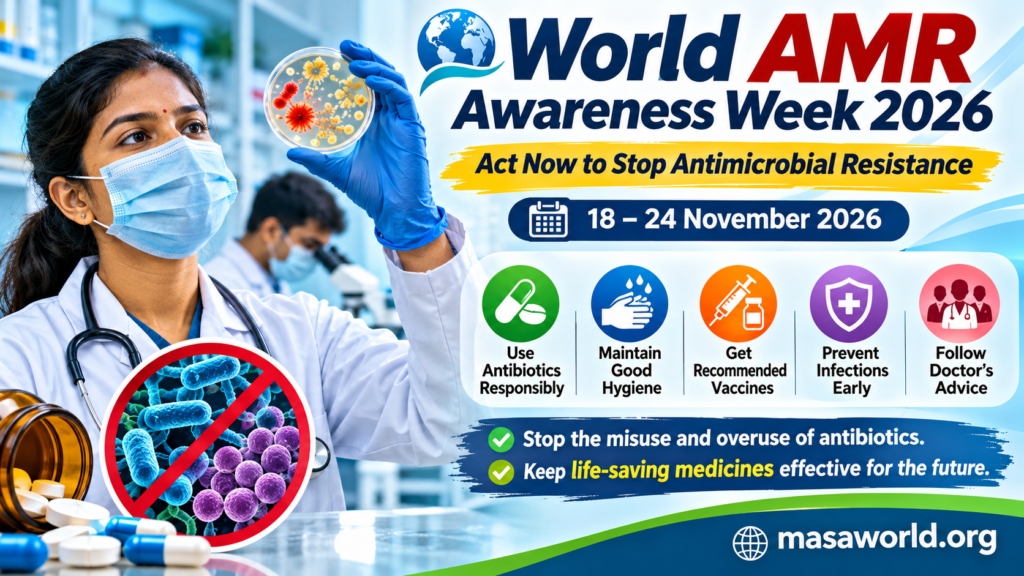
World AMR Awareness Week 2026 is being observed from 18 to 24 November. This year’s global theme is “One Health, one action: Prevent AMR now.” The campaign asks governments, health workers, veterinarians, farmers, researchers and communities to act together. It focuses on antimicrobial resistance across people, animals, plants, food systems and the environment.
India’s Ministry of Health and Family Welfare inaugurated the national observance in New Delhi on 18 November. The Ministry highlighted concerns about antimicrobial sales without prescriptions and inappropriate antibiotic use in outpatient care. It called for responsible medicine use, stronger infection prevention and coordinated action across sectors.
This guide explains what antimicrobial resistance means, why the One Health approach matters and what households, health facilities, pharmacies, farms and community organisations can do. It distinguishes official statements from wider analysis and practical guidance.
Table of Contents
- Executive Summary and Key Facts
- What Is Antimicrobial Resistance?
- Why AMR Requires Attention
- India’s 2026 Awareness Week: Official Message
- The One Health Approach Explained
- How Resistance Emerges and Spreads
- What Individuals and Families Can Do
- Actions for Health Services, Pharmacies and Farms
- Why the Environment Matters
- The Role of Schools and Community Organisations
- Social and Economic Impact
- MASA World Editorial Insight & Community Guidance
- Frequently Asked Questions
- Official References
Executive Summary and Key Facts
AMR occurs when microorganisms no longer respond to medicines that are intended to treat infections. It can make infections harder to treat and can increase the risk of severe illness. The problem crosses health, agriculture and environmental boundaries. It cannot be solved by one profession or department alone.
| Detail | Official information |
|---|---|
| Campaign | World AMR Awareness Week 2026 |
| Dates | 18–24 November 2026 |
| Global theme | One Health, one action: Prevent AMR now |
| India national observance | Inaugurated on 18 November 2026 in New Delhi |
| Lead Indian ministry | Ministry of Health and Family Welfare |
| Global coordinating bodies | WHO, FAO, UNEP and WOAH |
| Main priorities | Responsible antimicrobial use, infection prevention and cross-sector action |
Key message: Antibiotics are important medicines, but they do not treat viral infections. Use them only under qualified medical guidance. Prevention, vaccination, hygiene, safe food practices and responsible use help preserve effective treatments.
What Is Antimicrobial Resistance?
Antimicrobial resistance, or AMR, happens when microorganisms develop the ability to survive medicines that once controlled them. These microorganisms include bacteria, viruses, fungi and parasites. The medicines used against them include antibiotics, antivirals, antifungals and antiparasitic drugs.
Resistance is a biological process. Microorganisms can develop changes that help them survive exposure to medicines. Resistant organisms can then multiply and spread. Human actions can increase the pressure that favours resistant organisms. Examples include unnecessary medicine use, incorrect use and weak infection prevention.
AMR is wider than antibiotic resistance
Antibiotic resistance refers to bacteria that resist antibiotic medicines. AMR covers a wider range of microorganisms and antimicrobial medicines. Public discussion often uses the word “antibiotic resistance”, but the wider AMR challenge also includes resistance to medicines used against other infections.
When a medicine no longer works well, a clinician may have fewer effective treatment choices. Some infections may need more complex treatment, longer care or specialist support. The right response depends on the infection, the patient and available clinical evidence.
Why AMR Requires Attention
Modern healthcare depends on effective antimicrobial medicines. They help treat infections and support many medical procedures. If resistance increases, routine infections can become more difficult to manage. It can also complicate surgery, cancer treatment, intensive care and care for people with weakened immune systems.
AMR also affects animal health and food production. Infections in livestock and other animals can affect animal welfare and farm productivity. Resistant microorganisms can move through connected systems. Food handling, water, waste and the environment can influence how they persist and spread.
The issue also creates pressure on families and public services. Treatment may require more testing, alternative medicines or longer hospital care. This can increase costs and time away from work or education. These effects are not equal across communities. People with limited access to diagnosis and quality healthcare may face greater barriers.
India’s 2026 Awareness Week: Official Message
The Ministry of Health and Family Welfare inaugurated India’s national observance on 18 November 2026 at Kartavya Bhawan, New Delhi. According to the Ministry’s Press Information Bureau release, the event called for collective action against AMR. The Union Health Secretary emphasised the One Health approach, responsible antimicrobial use and stronger infection prevention.
The Ministry release reported that more than half of antimicrobial sales in India occur without prescriptions. It also stated that nearly half of outpatient antibiotic prescriptions are inappropriate. These are figures reported by the Ministry at the national observance. They should be read in that context and not treated as a measurement of every pharmacy or every outpatient visit.
The Ministry identified several areas for action:
- Public awareness and education on responsible antimicrobial use.
- Preventing self-prescription and inappropriate use of antibiotics.
- Proper disposal of unused antibiotics and expired medicines.
- Legal warnings at drug shops against sale of antimicrobials without prescriptions.
- Action against substandard and spurious medicines.
- Appropriate antimicrobial use in veterinary medicine, especially for food-producing animals.
- Stronger infection prevention and quality standards in healthcare facilities.
The national message aligns with the global campaign. Both focus on coordinated action across human health, animal health, food systems and the environment.
The One Health Approach Explained
One Health recognises that the health of people, animals, plants and the environment is connected. Microorganisms do not remain within one sector. Resistant organisms and resistance genes can move through people, animals, food, water and shared environments.
A hospital can improve antibiotic use, but the wider response also needs animal health services, farms, food producers, water systems and waste management. A farm can improve animal care, but safe food handling and environmental controls also matter. This is why AMR needs cooperation between different professions and public institutions.
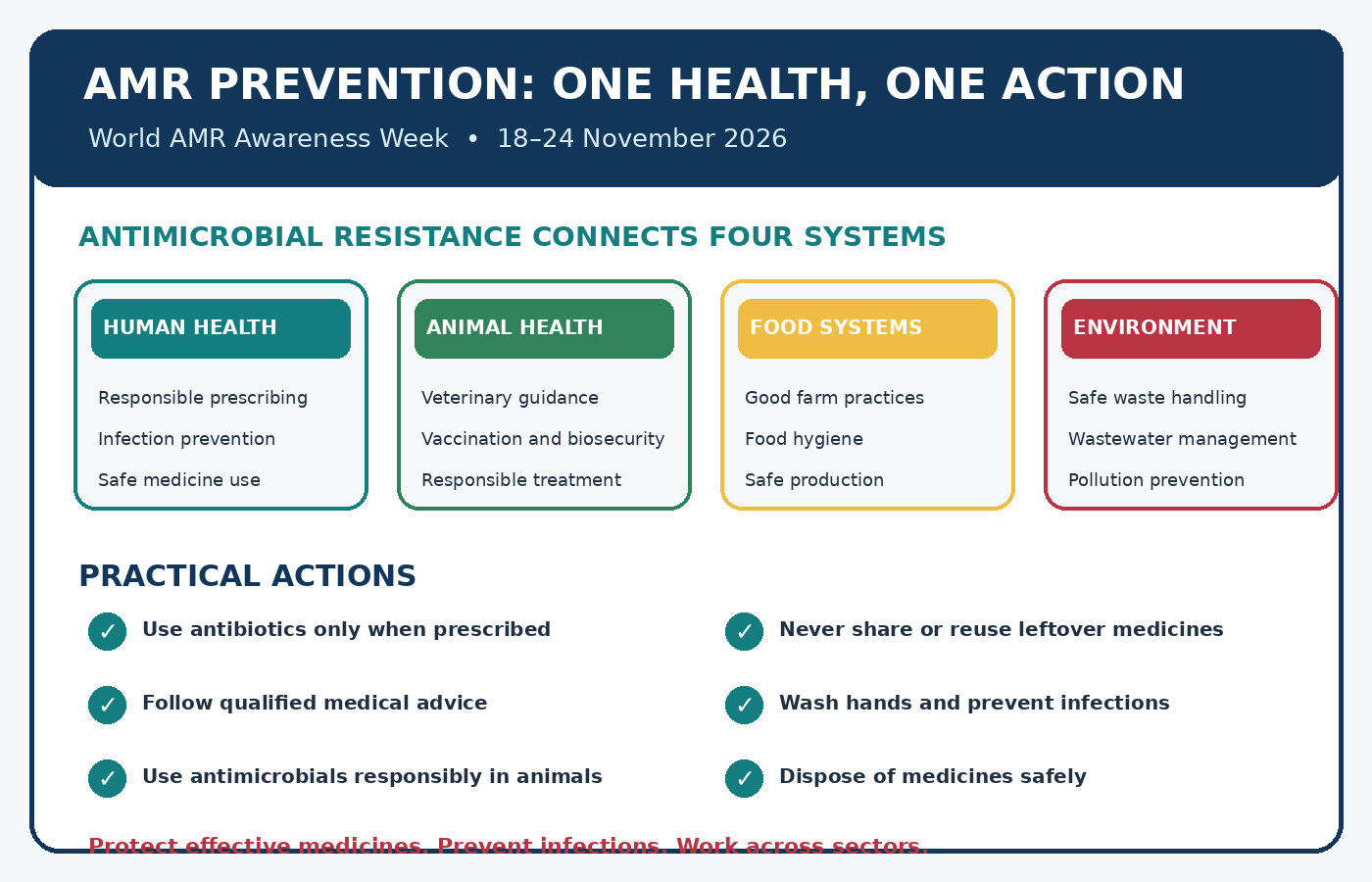
Infographic: AMR prevention requires coordinated action across human health, animal health, food systems and the environment.
Four connected areas of action
- Human health: Accurate diagnosis, responsible prescribing, infection prevention and safe medicine use.
- Animal health: Veterinary guidance, vaccination, biosecurity and appropriate treatment.
- Food systems: Safe production, hygiene and responsible practices across the food chain.
- Environment: Safe management of wastewater, pharmaceutical waste and pollution.
How Resistance Emerges and Spreads
Resistance can emerge through natural genetic changes and the transfer of resistance traits between microorganisms. The use of antimicrobial medicines can create selection pressure. Susceptible microorganisms may be reduced, while resistant ones survive and multiply. Misuse and overuse can increase this pressure.
Several conditions can contribute to the problem:
- Taking antibiotics when they are not needed.
- Using medicines without proper diagnosis or professional guidance.
- Sharing medicines or using leftover antibiotics.
- Weak infection prevention in healthcare and community settings.
- Inappropriate antimicrobial use in animals and food production.
- Unsafe disposal and poor management of waste and wastewater.
- Limited access to reliable diagnostics and quality medicines.
AMR is not simply caused by one patient or one prescription. It is shaped by healthcare access, prescribing systems, medicine regulation, infection prevention, agriculture and environmental management. Public education must therefore be paired with institutional improvements.
What Individuals and Families Can Do
People can help protect effective medicines through safe everyday behaviour. The first step is to avoid self-medication with antibiotics. A fever, cough or sore throat does not automatically mean that an antibiotic is required. A qualified clinician should assess the illness and decide whether an antimicrobial medicine is appropriate.
Practical steps for households
- Do not take antibiotics without a prescription from a qualified medical professional.
- Do not share antibiotics with family members or friends.
- Do not use leftover medicines from an earlier illness.
- Follow the clinician’s instructions about the prescribed medicine.
- Ask the prescriber or pharmacist if the dose, timing or duration is unclear.
- Do not stop, extend or change a prescribed treatment without medical advice.
- Do not demand antibiotics for a cold, flu or another viral illness.
- Wash hands and follow food hygiene practices to reduce infection risk.
- Follow recommended vaccination advice.
- Ask local health or waste authorities about approved medicine disposal options.
If symptoms worsen or a medicine causes a concerning reaction, contact a qualified health professional. Do not rely on online posts to change treatment. The correct decision depends on the diagnosis and the person’s medical circumstances.
Why hygiene and vaccination matter
Preventing infections reduces the need for antimicrobial treatment. Handwashing, safe food preparation, clean water, sanitation and appropriate vaccination all support infection prevention. Healthcare facilities also need cleaning, sterilisation and safe procedures. These measures reduce the spread of infections and help protect patients.
Actions for Health Services, Pharmacies and Farms
Hospitals and clinics
Healthcare facilities can strengthen infection prevention and antimicrobial stewardship. Stewardship programmes help clinicians select an appropriate medicine, dose and duration for a patient. They also support review of treatment as diagnostic information becomes available. These decisions must remain clinical and patient-specific.
Facilities can also improve hand hygiene, environmental cleaning, sterilisation, safe injections and infection surveillance. Clear records help identify patterns in antimicrobial use and resistance. Training and adequate staffing are important for sustained progress.
Pharmacies and medicine sellers
Pharmacies are a key point of contact for patients. They should follow prescription requirements and avoid supplying prescription-only antimicrobials without proper authorisation. Staff can explain safe storage and direct people with concerning symptoms to qualified healthcare professionals.
Regulatory systems should monitor compliance and address substandard or spurious medicines. Public notices can explain that antibiotics are not general medicines for every fever or cough. Responsible pharmacy practice supports safer use.
Farmers and animal health professionals
Antimicrobial medicines have legitimate uses in veterinary care. They should be used under appropriate veterinary guidance. Farmers can reduce infection risks through vaccination, clean housing, good nutrition, safe water and biosecurity. These practices can reduce the need for treatment.
Food-producing animals require careful medicine management. Producers should follow professional instructions and applicable withdrawal periods. Antibiotics should not replace good animal husbandry. Veterinary services and farmers need access to guidance and reliable medicines.
Why the Environment Matters
Resistant microorganisms and antimicrobial residues can enter the environment through several routes. These can include wastewater, healthcare waste, pharmaceutical manufacturing waste and farm runoff. Poor waste management can create conditions that support the persistence and spread of resistance.
Environmental action includes safe disposal, wastewater treatment, pollution control and responsible management of medicines. Healthcare facilities, manufacturers, farms and local authorities all have responsibilities. Communities can support these efforts by using approved disposal routes and avoiding the disposal of medicines into drains or open spaces.
Environmental monitoring and regulation require technical capacity. Public awareness alone cannot replace safe infrastructure. Investment in water, sanitation, waste treatment and pollution control is part of AMR prevention.
The Role of Schools and Community Organisations
Schools, sports clubs, NGOs and local community groups can make AMR information easier to understand. They should use trusted public health materials and invite qualified professionals for technical questions. Volunteers can share prevention messages, but they should not diagnose illnesses or recommend medicines.
Community activities can focus on a few clear messages:
- Antibiotics treat bacterial infections, not viral infections.
- Antibiotics should only be used under qualified medical guidance.
- Do not share or reuse leftover medicines.
- Hand hygiene, vaccination and safe food practices help prevent infections.
- Animal health and environmental protection are part of the same response.
- People should seek timely care when symptoms require medical attention.
Campaigns should avoid blame and fear. People need reliable information and access to quality healthcare. Community organisations should also protect personal health information. A useful awareness activity helps people understand what to do and where to seek professional advice.
Social and Economic Impact
AMR can affect the safety and cost of healthcare. When first-choice medicines do not work, clinicians may need alternative treatments or additional tests. Some patients may require longer care. This can place pressure on families, hospitals and public health budgets.
It can also affect health services that depend on infection control. Surgery, cancer treatment, intensive care and care for vulnerable patients all rely on effective infection prevention. Drug-resistant infections can make these services more complex.
Outside hospitals, AMR can affect livestock health, food production and household income. Farmers may face higher treatment costs or production losses. Food systems may face additional safety and surveillance needs. Environmental contamination can add costs for water and waste management.
The burden is not distributed equally. Communities with limited access to qualified clinicians, diagnostics, safe water and sanitation can face higher risks. A fair response must combine responsible medicine use with better access to prevention, diagnosis and treatment.
MASA World Editorial Insight & Community Guidance
Antimicrobial resistance is not only a hospital issue. It affects households, farms, food systems and the environment. Use medicines responsibly, prevent infections and seek qualified advice. Community organisations should share verified information and help people reach reliable health services.
MASA World encourages schools, NGOs, sports organisations and community leaders to include simple AMR awareness in public education. They can promote hygiene, vaccination, safe food practices and responsible medicine use. They should not replace clinical advice or spread unverified treatment claims.
The strongest public message is practical: use antimicrobials responsibly, prevent infections wherever possible and support systems that make safe care accessible. One Health becomes meaningful when institutions and communities work together beyond an awareness week.
Frequently Asked Questions
1. When is World AMR Awareness Week 2026?
It is observed from 18 to 24 November 2026. The global theme is “One Health, one action: Prevent AMR now.”
2. What does antimicrobial resistance mean?
AMR occurs when microorganisms no longer respond to medicines intended to treat them. It can make infections harder to treat and can increase the risk of severe illness.
3. Do antibiotics treat colds and flu?
No. Antibiotics act against bacteria, not viruses. A qualified clinician can assess symptoms and advise on appropriate care.
4. Can I use leftover antibiotics or share them?
No. Do not use leftover or shared antibiotics. Seek professional advice for a new illness and follow the prescribed instructions.
5. What does One Health mean in AMR prevention?
One Health connects human, animal, plant, food-system and environmental health. It calls for coordinated action across these sectors to prevent and contain antimicrobial resistance.
Official References
- Press Information Bureau, Ministry of Health and Family Welfare: Union Health Ministry Observes World AMR Awareness Week 2026, 18 November 2026.
- World Health Organization: World AMR Awareness Week 2026 – dates and global theme.
- World Health Organization: World AMR Awareness Week 2026 Campaign Guide, 9 October 2026.
- Food and Agriculture Organization: Get Involved in World AMR Awareness Week 2026.
- United Nations Environment Programme: World AMR Awareness Week 2026 and environmental action.
- National Centre for Disease Control: Bacterial Diseases and AMR surveillance activities.
Editorial note: The Indian national launch details and figures are attributed to the Ministry of Health and Family Welfare’s PIB release dated 18 November 2026. Global campaign dates and theme are based on WHO and Quadripartite campaign sources. This article is public information, not individual medical advice. Consult a qualified health professional for diagnosis and treatment.