MY Bharat Engages 81,622 People Through Sports Meets and Youth Parliaments: What Week 9 Shows
Category: Sports & Fitness | Updated: 19 November 2026
Mera Yuva Bharat (MY Bharat), under the Ministry of Youth Affairs and Sports, reported 81,622 participants through sports meets and Neighbourhood Youth Parliaments during Week 9 of the Nasha Mukt Yuva for Viksit Bharat Abhiyan. The Ministry’s Press Information Bureau (PIB) release, published on 16 November 2026, records 429 programmes and 1,039 activities across 36 States and Union Territories. The figures come from a provisional report dated 15 November 2026.
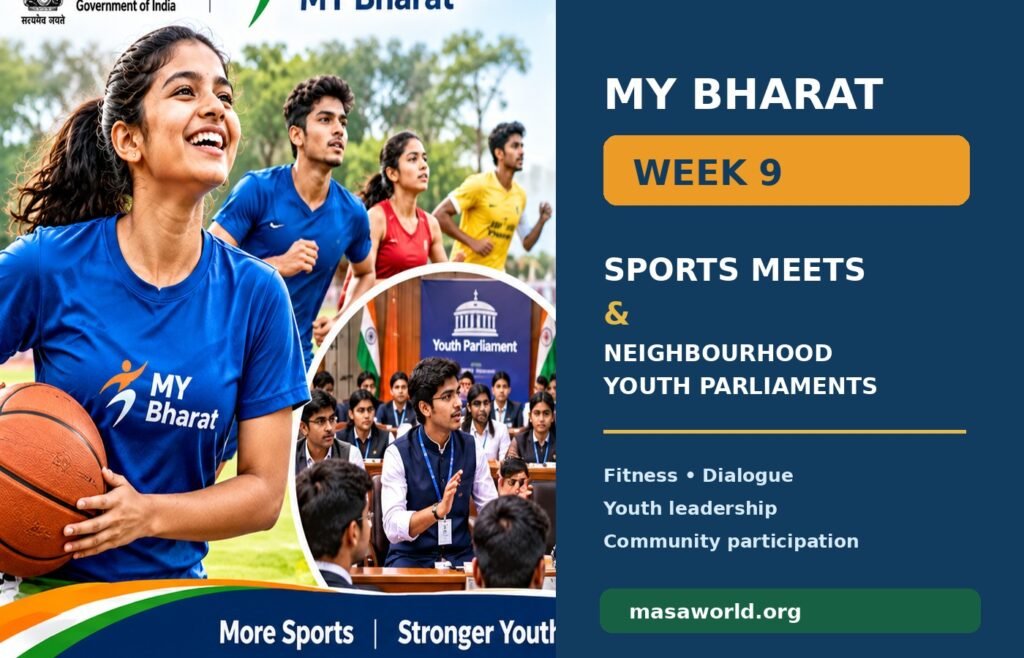
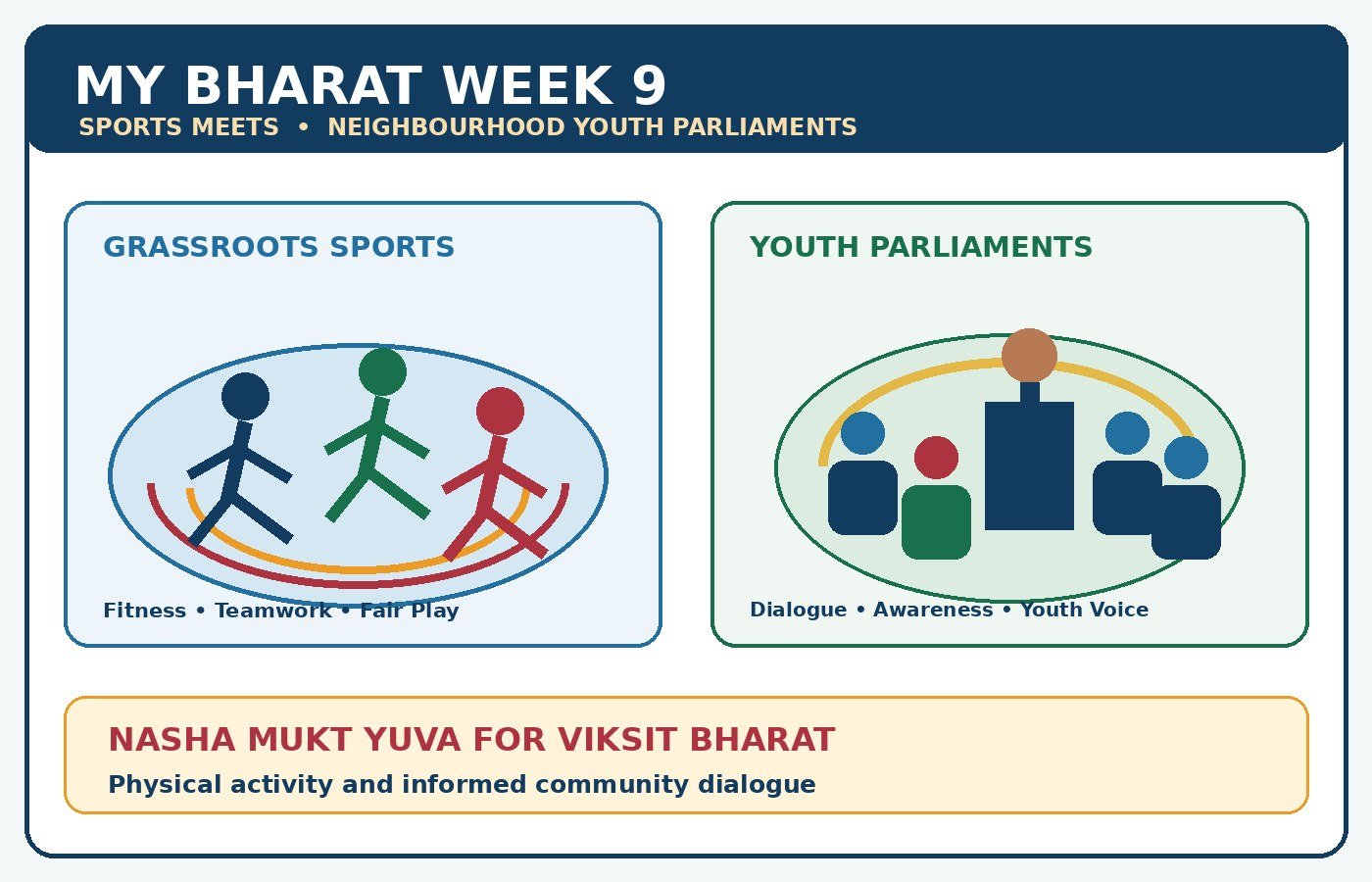
Week 9 combined two types of local engagement. Block-level sports meets created opportunities for physical activity and team competition. Neighbourhood Youth Parliaments provided a structured setting for discussions about substance use and prevention. The model links sport, health awareness and youth participation. Its long-term value will depend on regular local access, trained facilitators and reliable support services.
Week 9 at a Glance
The Ministry’s release separates sports programmes from youth parliament programmes. This distinction helps readers understand how the total was formed.
| Measure | Official provisional figure |
|---|---|
| Total participants across both formats | 81,622 |
| Total programmes | 429 |
| Total activities | 1,039 |
| Geographic coverage | 36 States and Union Territories |
| Sports programmes | 370 |
| Sports activities | 851 |
| Sports participants | 75,220 |
| Neighbourhood Youth Parliament programmes | 59 |
| Youth Parliament activities | 188 |
| Youth Parliament participants | 6,402 |
| Reporting basis | Provisional report dated 15 November 2026 |
Source note: These figures are reported by the Ministry of Youth Affairs and Sports through PIB on 16 November 2026. They describe programme reach. They do not measure a reduction in substance use or prove long-term behaviour change. Read the official PIB release.
What Happened During Week 9?
Week 9 formed part of the 100-week Nasha Mukt Yuva for Viksit Bharat Abhiyan. MY Bharat organised Cluster of Block-Level Sports Meets from 13 to 15 November 2026. Young people from multiple blocks and villages took part in sporting competitions. The activities aimed to promote fitness, teamwork, discipline and healthy lifestyles.
The second format was the Neighbourhood Youth Parliament (NYP). These programmes took place at block level on 14 November. They gave young people a structured space to discuss substance-use challenges and ways to prevent addiction. The Ministry reported 59 NYP programmes across 188 activities.
The two formats addressed different needs. Sport provided a shared activity and a reason to participate. Youth parliaments created space for questions, discussion and local ideas. Together, they offered a wider community engagement model than a single awareness speech.
Sports Meets: Participation and Grassroots Access
The Ministry reported 370 sports programmes, 851 activities and 75,220 participants. The meets took place across block and village clusters. This approach can bring organised activity closer to young people who may not have access to large sports venues or established clubs.
Local competitions can introduce participants to athletics, team games and traditional sports. They can help young people practise teamwork, communication, fair play and self-discipline. A block-level event can also connect schools, youth clubs, coaches and community volunteers.
However, a sports meet is only an entry point. A one-day event cannot provide the same benefits as regular training. Continued participation needs accessible grounds, safe equipment, trained coaches and a predictable schedule. It also needs fair opportunities for girls, young people with disabilities and participants from low-income households.
From event participation to regular access
Local institutions can build a follow-up plan after a sports meet. They can identify nearby grounds and schools that can host weekly sessions. Coaches can offer age-appropriate practice and explain safe movement. Youth clubs can organise friendly competitions and help participants move into local leagues where these are available.
Organisers should avoid judging success only by medals or attendance. Repeat participation, safe coaching, inclusion and access to regular practice provide a stronger picture of community value.
Neighbourhood Youth Parliaments: Dialogue and Prevention
The Ministry reported 59 Neighbourhood Youth Parliament programmes with 6,402 participants. These sessions complemented the sports activities by focusing on discussion and awareness. Each programme featured four structured sessions.
- Introduction to the MY Bharat Portal: Participants received an introduction to the platform and youth engagement opportunities.
- Understanding Substance Abuse: The discussion examined challenges facing India’s youth.
- From Awareness to Action: Participants considered tools and steps that can support a Nasha Mukt Yuva.
- Stories of Change: An audio-visual presentation shared journeys linked to the Nasha Mukt Bharat effort.
The format can make prevention discussions more relevant to local life. Young people can raise questions about peer pressure, stress, availability of help and the role of families and communities. A good session should allow respectful questions. It should not force participants to disclose personal or family experiences in public.
The PIB release identifies programmes at Nallampalli Block in Dharmapuri district, Tamil Nadu, and at Rangareddy and Kollapur Block in Nagarkurnool district, Telangana. These examples show the local delivery approach. They should not be treated as a complete list of participating locations.
Prevention messages need a support pathway
Awareness is useful when participants know where to seek help. Facilitators should provide verified information about qualified health professionals, counselling and authorised treatment services. Coaches and youth volunteers should not diagnose substance dependence or attempt treatment themselves.
Substance dependence can involve health, family and social factors. People affected by it need support without stigma. Prevention sessions should use accurate language and protect privacy. Public shaming can discourage people from asking for help.
Understanding the Official Numbers
The 81,622 figure combines participants reported across the MY Bharat sports meets and Neighbourhood Youth Parliaments. The 75,220 sports participants and 6,402 NYP participants add up to the reported total. The programme counts also add up: 370 sports programmes and 59 NYP programmes make 429 programmes. The activity counts add up to 851 sports activities and 188 NYP activities, making 1,039 activities.
There is a separate PIB release dated 14 November 2026 about block-level sports meets organised through the Directorate of MY Bharat–National Service Scheme (NSS). That release reports 87,481 participants and 992 activities across more than 130 institutions. It describes a separate NSS reporting stream and its own field-report snapshot. It should not be added to the 81,622 figure or presented as the same combined MY Bharat sports-and-parliament total.
Keeping these reports separate is important. Government programmes may report activities through different directorates, partners and reporting windows. A reader should check the issuing department, reporting date and activity scope before comparing totals. Read the separate NSS release dated 14 November.
The main Week 9 release also notes support from partner organisations, including Brahma Kumaris, Heartfulness, Project Point, ASSOCHAM and FICCI. Heartfulness supported outreach initiatives, including walkathons in Bengaluru, Mysore and Chennai. Project Point participated in activities at Begunia Block in Khordha district, Odisha. The release does not provide a separate quantified impact assessment for each partner.
What These Activities Can and Cannot Show
The figures show that the programme reached participants across 36 States and Union Territories. They also show that the campaign used two formats: sports competitions and structured discussion. This is useful information about scale and delivery.
But participation is not the same as impact. Attendance does not establish whether a person changed a habit, avoided substance use or accessed treatment. It also does not show whether a local sports club continued after the event. These outcomes need separate follow-up data.
A stronger evaluation could examine:
- How many participants returned for regular sports sessions.
- Whether girls and young people with disabilities had equal access.
- How many local grounds and clubs offered follow-up activities.
- Whether youth parliament participants helped plan community action.
- Whether prevention sessions provided verified referral information.
- Whether participants felt safe asking questions and seeking support.
- Whether organisers reported costs, injuries and safeguarding concerns.
These are suggested evaluation measures. They are not results reported for Week 9. The Ministry’s release describes the participant totals as provisional. Any future comparison should use the final data if the Ministry publishes an updated report.
How Communities Can Adapt the Model
Schools, youth clubs, sports associations and community organisations can adapt the general approach to local needs. They should not claim to be official MY Bharat partners unless they have formal authorisation. A local programme can still use the principles of sport, dialogue and prevention without presenting itself as a government event.
1. Start with a local needs check
Identify available grounds, school facilities and community spaces. Ask young people which activities they want to try. Check whether transport, timings or equipment costs could prevent participation. Plan around local weather, school schedules and community needs.
2. Select inclusive activities
Choose activities that match the venue and age group. Athletics, football, kabaddi, volleyball and fitness circuits can be adapted to different facilities. Traditional games can also encourage participation. Use clear rules and safe equipment.
3. Use qualified coaches and facilitators
Coaches should understand age-appropriate training, warm-ups, cool-downs and injury prevention. Youth parliament facilitators should be able to guide discussion without humiliating or pressuring participants. Invite qualified health educators for prevention sessions.
4. Connect awareness with verified help
Provide accurate information about local health and counselling services. Do not make promises about treatment outcomes. Do not ask young volunteers to act as counsellors. If a participant needs help, protect their privacy and guide them towards qualified services.
5. Build a repeat schedule
Set a weekly or monthly activity calendar. Keep a record of attendance and repeat participation. Ask participants what should improve. A regular programme is more likely to build community trust than an isolated event.
Safety, Inclusion and Responsible Prevention
Safety should be planned before registration begins. Organisers should assess the venue, drinking-water access, first-aid arrangements and emergency contacts. Contact sports need suitable protective equipment and active supervision. Participants should have a clear way to report harassment or unsafe behaviour.
Inclusion requires practical steps. Girls should receive fair access to coaching, equipment and playing time. Young people with disabilities may need adapted activities, accessible routes or additional support. Families should be able to understand the schedule and safeguarding rules. Participation costs should not exclude young people from low-income households.
Prevention sessions need similar care. Use non-judgmental language. Do not ask participants to reveal personal experiences in a group. Do not identify or label a person as an addict. Share verified information and explain how to access professional support. A sports coach or volunteer should never replace a medical or mental-health professional.
How to Measure Long-Term Results
Local organisers can use a simple monitoring framework. It should record activity without collecting unnecessary personal data.
| Area | Useful measure |
|---|---|
| Access | Number of sessions, venues and regular opportunities |
| Participation | Repeat attendance and inclusion by gender and disability |
| Quality | Qualified coaches, safe equipment and participant feedback |
| Youth leadership | Ideas proposed and local actions led by young people |
| Prevention support | Availability of verified referral information and trained facilitators |
| Safeguarding | Clear reporting routes and documented response procedures |
Reports should distinguish outputs from outcomes. The number of events is an output. Continued participation, improved access and trusted referral pathways are possible outcomes that require follow-up. A programme should publish only figures it can explain and verify.
MASA World Editorial Insight & Community Guidance
The strongest youth programmes connect activity with continuity. A weekend tournament can create interest, but regular access builds skills and habits. Communities should invest in safe grounds, trained coaches and inclusive participation. Prevention messages should be linked to trusted support services and delivered without stigma.
Week 9 offers a useful example of how sport and civic discussion can work together. Sports meets can bring young people into shared activity. Youth parliaments can give them space to discuss local challenges. Both need a clear follow-up plan.
MASA World encourages schools, sports bodies and community organisations to measure more than attendance. They should ask whether young people can return, whether all groups can participate safely and whether people who need support can reach qualified services. These are practical tests of a lasting youth programme.
Frequently Asked Questions
1. How many people did MY Bharat engage during Week 9?
The provisional report records 81,622 youth and citizens across sports meets and Neighbourhood Youth Parliaments. The report is dated 15 November 2026.
2. How many States and Union Territories were covered?
The Ministry reported activities across 36 States and Union Territories. The release records 429 programmes and 1,039 activities.
3. How many sports programmes were organised?
The release records 370 sports programmes with 851 activities and 75,220 participants. The sports meets took place from 13 to 15 November 2026.
4. What happened in the Neighbourhood Youth Parliaments?
The 59 programmes involved 6,402 participants across 188 activities. Sessions covered the MY Bharat Portal, substance-use challenges, prevention tools and stories of change.
5. Can local organisations copy the format?
Local groups can adapt inclusive sports and youth dialogue to their communities. They must not claim official MY Bharat partnership without formal authorisation.
Official References
- PIB, Ministry of Youth Affairs and Sports: MY Bharat Week 9 results, 16 November 2026.
- PIB, Directorate of MY Bharat–National Service Scheme: Separate block-level sports meet report, 14 November 2026.
- Mera Yuva Bharat (MY Bharat) official portal.
- Ministry of Youth Affairs and Sports, Government of India.
Editorial note: The combined MY Bharat Week 9 figures in this article are provisional and based on the Ministry’s report dated 15 November 2026. The separate NSS release uses a different reporting stream. Figures from the two releases have not been combined.