
A Practical Everyday Wellness Plan: Sleep, Movement, Nutrition and Stress Management

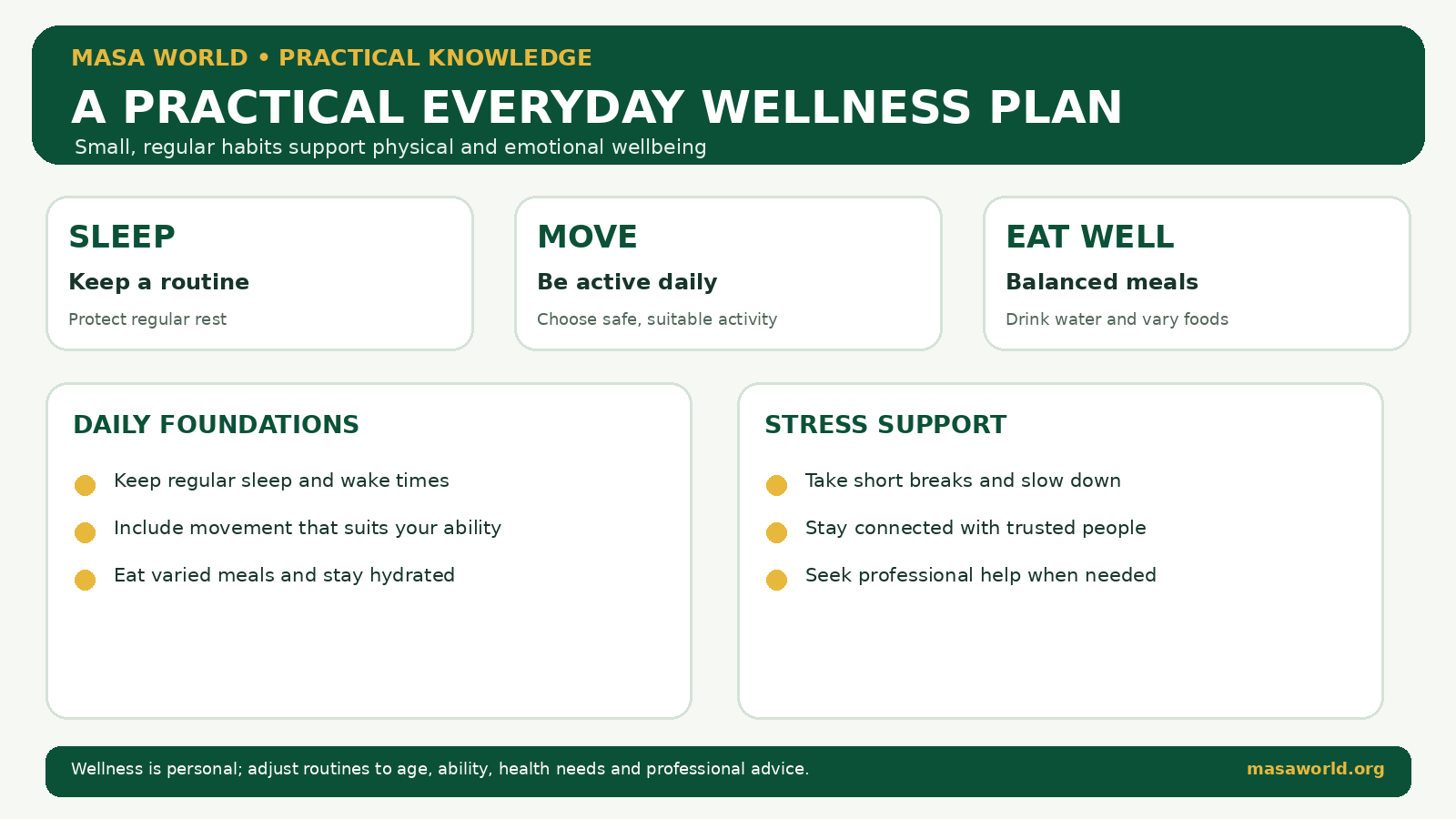
Good health is rarely built through one dramatic change. It grows from ordinary decisions repeated over time: what we eat, how often we move, when we rest, how we respond to pressure and whether we ask for help when something is wrong. A practical wellness plan should fit real life—not demand expensive products, strict routines or perfection.
Why Wellness Is a Daily Practice
Wellness includes physical health, mental well-being, social connection and the conditions in which people live, study and work. Sleep, food, activity and stress influence one another. For example, a late-night routine can make it harder to wake up for a walk; skipping meals can affect concentration; and long periods of sitting can leave the body feeling stiff. Small improvements across several areas are often more sustainable than trying to fix everything at once.
There is no single ideal routine for every person. Age, disability, health conditions, work schedules, family responsibilities, culture, climate and income all matter. Use this guide as general education and adapt it to your circumstances.
Start With Your Real Life
Before changing habits, observe a normal week. Notice when you usually sleep, how much time you spend sitting, what meals are convenient, when you feel most energetic and what tends to create stress. Choose one or two areas where a small change would make daily life easier. A plan that works on a busy Monday is more useful than a perfect plan that only works during a holiday.
Make each goal specific. Instead of “I will become fit,” try “I will take a 15-minute walk after lunch on four days this week.” Instead of “I will sleep better,” choose “I will begin winding down at the same time on weeknights.” Record what happened without judging yourself. The purpose is to learn what is workable.
Build a Balanced Indian Plate
A balanced diet is about variety, adequacy and moderation—not one superfood or a rigid menu. Everyday Indian meals can include seasonal vegetables, fruit, pulses, beans, whole grains or millets, nuts and seeds, and suitable dairy or other protein sources. Dal with roti, rice with rajma, vegetable khichdi with curd, or idli with sambar can all contribute to a varied eating pattern.
Try to include different colours and food groups across the day. Vegetables and fruit add fibre and micronutrients; pulses and beans provide protein and fibre; grains supply energy; and nuts, seeds and appropriate oils contribute fats. Choose water regularly and limit frequent sugary drinks, very salty snacks and heavily processed foods. The right portions vary with age, activity, health needs and appetite.
The ICMR–National Institute of Nutrition’s Dietary Guidelines for Indians provide a useful India-specific reference. They encourage dietary diversity, traditional and seasonal foods, and balanced food choices. Avoid treating a general food guide as a personalised prescription, especially for infants, pregnancy, older adults or people managing a medical condition.
Plan Meals Without Complication
Healthy eating becomes easier when the next meal is not a last-minute puzzle. Keep a few affordable staples available: dal, chickpeas, beans, seasonal vegetables, fruit, curd or milk if suitable, eggs or other preferred protein sources, and whole-grain staples. Cook extra portions when practical and use leftovers safely. Frozen or locally available seasonal produce can also be useful.
Do not skip meals to compensate for eating more earlier, and be cautious of extreme diets, detox claims or supplements promoted as shortcuts. If you have allergies, diabetes, kidney disease, an eating disorder history or another health concern, ask a qualified dietitian or healthcare professional for individual guidance.
Move More Throughout the Day
Physical activity is not limited to a gym. Walking to nearby places, cycling, dancing, household work, gardening, active games and organised sports all count. If you sit for long periods, stand up and move briefly at intervals that suit your work and ability. Short activity breaks are a realistic starting point for people who are currently inactive.
For adults, WHO guidance recommends building towards at least 150 minutes of moderate-intensity activity a week, or an equivalent amount of vigorous activity, alongside muscle-strengthening activity on two or more days. Some people may need a different starting point. Children and adolescents need regular active play and age-appropriate activity. Any movement is generally better than none, and progress should be gradual.
Use the “talk test” as a simple guide: during moderate activity you can usually talk, though singing may be difficult. Choose enjoyable activities and adjust for heat, pollution, safety, footwear and access to suitable spaces. The best routine is one you can repeat safely.
Build Strength and Fitness Safely
Strength work can use body weight, resistance bands, light weights or everyday movements such as sit-to-stand exercises. Begin with manageable effort, learn correct technique and allow recovery between harder sessions. Warm up before vigorous activity and increase duration or intensity gradually rather than changing everything at once.
Do not push through sharp pain, dizziness, chest discomfort or unusual breathlessness. Stop and seek medical advice when symptoms are severe, new or persistent. People returning after injury, living with a chronic condition, or who have been inactive for a long time may benefit from professional advice before starting a demanding programme. Fitness is not a competition with another person’s pace.
Protect Your Sleep Routine
Sleep supports learning, mood, attention and physical recovery. Keep a reasonably consistent sleep and wake time where possible. Create a short wind-down routine—such as reading, gentle stretching, preparing for tomorrow or listening to calm audio. Keep the bedroom comfortable, dark and quiet to the extent your home allows.
Notice what interferes with your rest. Late caffeine, heavy meals close to bedtime, irregular work shifts, worries or bright screens may affect some people. You do not need to follow every internet sleep rule; test practical changes and keep what helps. Persistent insomnia, loud snoring with choking or gasping, or severe daytime sleepiness deserves discussion with a healthcare professional.
How Much Sleep Is a Useful Target?
Sleep needs change with age. As a general reference, the US Centers for Disease Control and Prevention lists 7 or more hours for adults aged 18–60, 7–9 hours for ages 61–64, and 7–8 hours for adults 65 and older. Teenagers generally need 8–10 hours, while school-age children need more. These are population-level recommendations, not a diagnosis or a rigid rule for every person.
| Age group | General daily sleep reference |
|---|---|
| 6–12 years | 9–12 hours |
| 13–17 years | 8–10 hours |
| 18–60 years | 7 or more hours |
| 61–64 years | 7–9 hours |
| 65 years and older | 7–8 hours |
Try to protect enough time for sleep rather than relying on weekend catch-up alone. If sleep problems continue despite reasonable routine changes, or you experience gasping during sleep or severe daytime sleepiness, seek clinical assessment.
Manage Stress Before It Builds
Stress can come from study, work, caregiving, money, relationships and uncertainty. Start by naming the pressure rather than treating every difficult feeling as a personal failure. Break a large task into the next small action, take a short movement break, practise slow comfortable breathing, write down worries or speak with someone you trust.
Protect time for connection and activities that restore you. Set realistic boundaries around work and messages when possible. Mindfulness, prayer, yoga, hobbies or time outdoors may support some people, but none is a guaranteed cure. If anxiety, low mood or stress is persistent, affects daily functioning or feels overwhelming, professional mental-health support is appropriate. If there is immediate danger or risk of self-harm, seek urgent local help.
Hydration and Recovery
Drink water regularly and pay attention to thirst, weather and activity. Needs vary with body size, temperature, diet, health and medicines, so a single fixed daily target does not suit everyone. People with medical conditions that require fluid restriction should follow their clinician’s advice. In hot weather, plan activity for safer times, take breaks and avoid ignoring signs of heat illness.
Recovery also means rest days, adequate food, comfortable clothing and allowing time after illness or strenuous exercise. More training is not always better. Build a routine that leaves room for family, study, work and enjoyment.
Create a Weekly Wellness Rhythm
Rather than scheduling every minute, create a few anchors: a regular bedtime, planned grocery or meal preparation, movement on selected days, a strength session if suitable, and a short weekly review. Put these anchors in a calendar and keep a smaller “minimum version” for busy days—for example, a ten-minute walk instead of skipping movement entirely.
Use a simple tracker with four prompts: What did I try? What helped? What got in the way? What is one adjustment for next week? Track behaviours and how you feel, not only weight or appearance. Avoid comparing your progress with edited social-media images or someone else’s training schedule.
Make Healthy Choices Easier
Environment often matters more than motivation. Keep a water bottle where you work, place walking shoes near the door, prepare a simple breakfast option, set a reminder to stand up, or keep your phone away from the bed if it distracts you. Invite a friend or family member to join a walk or prepare a meal together.
Families, schools and workplaces can help by making drinking water accessible, providing safe opportunities for movement, allowing breaks and treating mental well-being seriously. Wellness is not only an individual responsibility; supportive environments make healthy choices more realistic.
When to Seek Professional Help
General wellness advice cannot diagnose symptoms or replace medical care. Arrange a consultation for persistent pain, unexplained weight changes, ongoing fatigue, recurring sleep problems, breathlessness, digestive symptoms or mood changes that interfere with everyday life. Seek urgent care for severe chest pain, difficulty breathing, fainting, signs of stroke or other emergency symptoms.
Be careful with online health claims. Check whether advice comes from a recognised health organisation or qualified professional, look for the date and evidence, and be wary of guaranteed results, miracle cures and products that pressure you to buy immediately.
A Simple Day Plan You Can Adapt
There is no perfect clock-based routine. The example below shows how wellness habits can fit around study, work, caregiving or household responsibilities. Shift the times to match your commute, climate, family needs and sleep schedule.
| Part of day | Practical action | Why it helps |
|---|---|---|
| After waking | Drink water if thirsty, get daylight where possible, wash and prepare for the day | Creates a steady start without a complicated ritual |
| Breakfast / first meal | Choose a filling option such as vegetable poha with peanuts, idli-sambar, eggs with whole-grain roti, or dal chilla | Adds variety and makes the meal more satisfying |
| During work or study | Break up long sitting periods with brief movement; take a proper meal break | Reduces uninterrupted sitting and supports concentration |
| Afternoon | Choose fruit, curd, roasted chana or another suitable snack if hungry; drink water regularly | Makes a practical alternative to relying only on packaged snacks |
| Evening | Walk, cycle, play a sport or do an accessible strength session | Builds activity into a predictable part of the day |
| Dinner | Use familiar foods: dal/beans, vegetables and roti/rice or another grain; adapt portions to appetite and needs | Supports dietary variety without special products |
| Before bed | Reduce stimulating screen use, prepare for tomorrow and follow a calm wind-down routine | Helps protect a consistent sleep opportunity |
Food examples are options, not a prescribed menu. Consider allergies, cultural preferences, affordability and medical needs. People with diabetes, kidney disease, food allergies, pregnancy-related needs or a history of disordered eating should seek individual advice from a qualified professional.
A Seven-Day Wellness Reset
- Day 1 – Observe: Note your usual sleep, movement, meals and stress patterns without trying to change everything.
- Day 2 – Add variety: Include a fruit or vegetable and a suitable protein source in a meal.
- Day 3 – Move: Add a short walk, active break or accessible movement you enjoy.
- Day 4 – Prepare: Plan one simple meal or snack for a busy day.
- Day 5 – Wind down: Try a calmer pre-sleep routine and a consistent bedtime.
- Day 6 – Connect: Spend time with a supportive person or ask for help with one stressful task.
- Day 7 – Review: Keep the habits that helped and choose one realistic focus for the next week.
This is a gentle starting framework, not a medical programme or a challenge to complete perfectly. Adapt or skip steps that do not suit your health, age or circumstances.
Adapt the Plan for Age, Disability and Life Stage
A wellness routine should be adjusted to the person, not the other way around. Children and teenagers need adequate food, sleep, play, supportive relationships and age-appropriate activity; avoid adult dieting rules or appearance-based pressure. Adults can combine aerobic movement with strength work and recovery. Older adults may benefit from balance and coordination exercises alongside strength and walking, with support where needed. Pregnant or postpartum people, people with disabilities, and those living with long-term conditions can be active in ways that are safe and accessible for them; a clinician or qualified rehabilitation professional can help adapt activity when necessary.
Do not compare routines across age groups or health circumstances. A wheelchair user’s movement plan, a person recovering from illness and a competitive athlete will naturally look different. The useful question is whether the plan is safe, meaningful and sustainable for that individual.
Preventive Health, Personal Hygiene and Routine Care
Everyday wellness also includes prevention. Keep vaccinations up to date according to the national schedule and personal medical advice; practise handwashing with soap, safe food handling and oral hygiene; use clean drinking water and maintain safe sanitation. Attend recommended health checks and screening based on age, sex, family history and risk factors. Blood pressure, blood glucose and other checks may be advised by a health professional; screening intervals are not identical for everyone.
Keep a simple record of important health information such as allergies, current medicines, vaccination dates and test reports. Take medicines only as prescribed and do not stop long-term treatment because you feel better without discussing it with your clinician. Avoid self-diagnosis from social media and do not use supplements as substitutes for balanced food or prescribed care.
Digital Well-being and a Healthier Surrounding Environment
Phones and screens can support learning and connection, but unplanned scrolling, late-night notifications and long uninterrupted sitting can disrupt routines. Set practical boundaries: silence non-essential alerts during focused work, take movement breaks, protect screen-free time before bed when possible, and avoid using a device while walking or crossing roads. If screens are essential for work or study, focus on regular breaks and comfortable posture rather than unrealistic screen-free targets.
Make the environment part of the plan. In hot weather, choose cooler hours for outdoor activity, drink water regularly and take shade breaks. When air quality is poor, check official local advisories and consider moving strenuous activity indoors or reducing its intensity. Choose safe, well-lit routes, use appropriate road-safety equipment when cycling, and make movement accessible at home or in community spaces.
A Realistic Weekly Example
The following is a flexible example for an adult who is generally healthy and able to exercise. It is not a prescription. Short sessions can be accumulated, rest days are useful, and the plan should be scaled down or adapted for health conditions, disability, pregnancy, age or current fitness.
| Day | Movement idea | Everyday wellness anchor |
|---|---|---|
| Monday | 25-minute brisk walk | Prepare a simple meal plan |
| Tuesday | 20-minute walk plus light strength exercises | Begin a consistent wind-down routine |
| Wednesday | 30 minutes of cycling, dancing or another enjoyable activity | Take short sitting breaks |
| Thursday | 20-minute walk plus light strength exercises | Connect with a friend or family member |
| Friday | 25-minute brisk walk | Review hydration and meal variety |
| Saturday | 30 minutes of sport, active play or outdoor movement | Make time for a restorative activity |
| Sunday | Gentle mobility, an easy walk or rest | Review the week and plan the next one |
This example totals around 150 minutes of moderate activity if the sessions are performed at a moderate intensity. WHO guidance for adults is 150–300 minutes of moderate aerobic activity per week, or an equivalent combination, plus muscle-strengthening activity on at least two days. Start with less if needed and build gradually; some activity is better than none.
How Families, Schools and Communities Can Support Wellness
Healthy routines are easier when people have safe spaces, affordable nutritious food, clean water, supportive relationships and time to rest. Families can share meal preparation and walks; schools can protect time for play, physical education, hydration and age-appropriate health education; workplaces can encourage breaks and respectful workloads; and local organisations can create inclusive sports and wellness activities that welcome beginners, girls and women, older people and persons with disabilities.
MASA World can support community wellness through low-cost fitness sessions, inclusive games, nutrition-awareness workshops using official guidance, youth mental-wellbeing awareness, safe-sport practices and referral information for professional support. Programmes should avoid body-shaming, unqualified diagnosis, miracle-cure claims and one-size-fits-all fitness targets. Participation, accessibility, safety and sustained engagement are more meaningful measures than appearance-based outcomes.
Frequently Asked Questions
Do I need a gym to improve my fitness?
No. Walking, cycling, active play, dancing, body-weight exercises and everyday movement can all contribute. Choose safe activities that fit your ability and surroundings.
What should I change first if I feel overwhelmed?
Choose one small habit with a clear cue, such as a short walk after lunch or beginning a wind-down routine at a consistent time. Build gradually after it becomes manageable.
Is a healthy diet expensive?
Not necessarily. Seasonal vegetables, local fruit, pulses, beans and familiar grains can form the basis of practical meals. Plan around availability, budget and personal needs.
How much exercise is enough?
Recommendations depend on age and health. WHO guidance for adults suggests at least 150 minutes of moderate activity each week, with strengthening activity on two or more days. Start below this if needed and build safely.
Can wellness habits replace medical treatment?
No. Healthy routines can support well-being but do not replace diagnosis, prescribed treatment or professional care. Discuss changes with a clinician when you have a medical condition or concerning symptoms.
Final Thoughts
A practical wellness plan is built from repeatable habits, not perfection. Eat a varied diet, move in ways you enjoy, protect sleep, make room for recovery and seek support when you need it. Begin with a small change, review honestly and adjust as life changes. The aim is not to control every part of the day; it is to create a healthier rhythm that can last.
Editorial note: This article is general educational information and is not a substitute for individual medical, nutritional or mental-health advice.
Trusted Resources and Further Reading
- World Health Organization – Physical Activity (updated 4 November 2026)
- World Health Organization – Healthy Diet
- ICMR–National Institute of Nutrition – Dietary Guidelines for Indians (2024)
- Ministry of Youth Affairs and Sports – Fit India Fitness Protocols
- WHO – Guidelines on Physical Activity and Sedentary Behaviour
- US Centers for Disease Control and Prevention – About Sleep and Age-Based Sleep Duration
- Directorate General of Health Services, Ministry of Health and Family Welfare – Tele-MANAS mental-health support (14416 / 1800-89-14416)
- WHO India – Physical Activity
Explore More from MASA
Continue building healthy routines with these related MASA guides: