
Guru Nanak Jayanti and Dev Deepawali 2026: Why 24 November Connects Two Living Traditions
Updated: 19 November 2026 | Category: Festivals & Culture
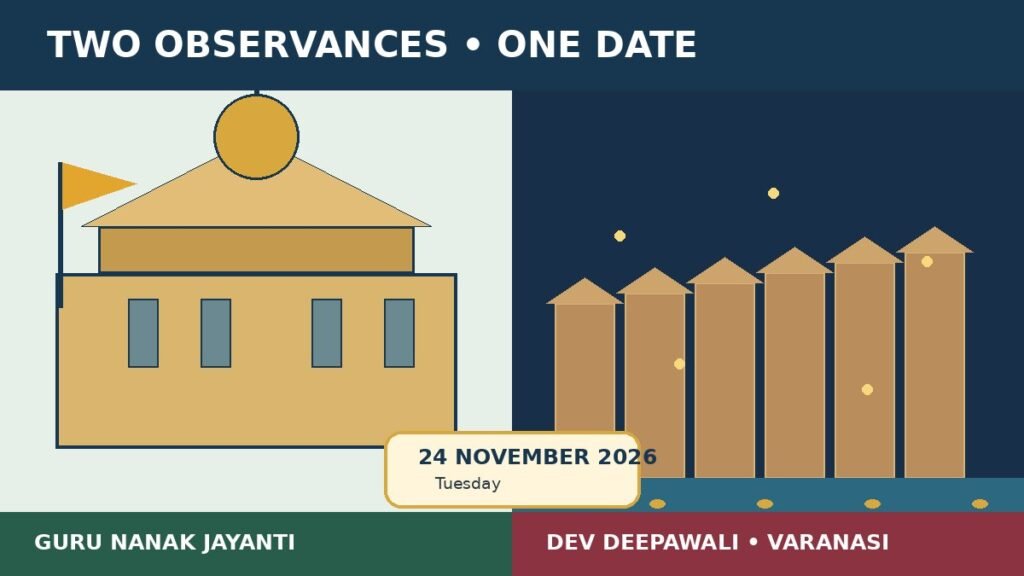
Two important observances fall on Tuesday, 24 November 2026: Guru Nanak Jayanti and Dev Deepawali. The date appears in the Government of India holiday calendar for Guru Nanak’s Birthday. Incredible India and Uttar Pradesh Tourism list Dev Deepawali in Varanasi on the same date.
The shared date creates a notable moment in India’s cultural calendar. Yet the two observances have different histories, beliefs and practices. Guru Nanak Jayanti commemorates Guru Nanak Dev Ji and is a Sikh observance. Dev Deepawali is a Hindu observance linked with Kartik Purnima and the sacred riverfront of Varanasi.
This guide explains both traditions separately. It covers their meaning, common practices, visitor guidance and cultural context. It also explains how to participate with respect. Readers should check local gurdwara, temple and administration notices before travelling.
Table of Contents
- Executive Summary and Date
- Why Both Observances Fall on 24 November
- Guru Nanak Jayanti: Meaning and Traditions
- Dev Deepawali: Varanasi’s Festival of Lights
- How the Two Observances Differ
- Visiting a Gurdwara Respectfully
- Planning a Visit to Dev Deepawali in Varanasi
- Culture, Tourism and Community Care
- Environmental Responsibility
- MASA World Editorial Insight & Community Guidance
- Frequently Asked Questions
- Official References
Executive Summary and Date
The 2026 date is confirmed by official tourism and government calendar sources. The Government of India’s holiday list records Guru Nanak’s Birthday on 24 November. Incredible India lists Guru Nanak Jayanti on the same date. Uttar Pradesh Tourism lists Dev Deepawali in Varanasi on 24 November 2026.
| Observance | Date in 2026 | Tradition and main association |
|---|---|---|
| Guru Nanak Jayanti / Gurpurab | Tuesday, 24 November | Sikh observance marking the birth of Guru Nanak Dev Ji |
| Dev Deepawali | Tuesday, 24 November | Hindu observance on Kartik Purnima, especially associated with Varanasi |
Why Both Observances Fall on 24 November
India follows several religious and regional calendars. Many Hindu observances are linked with lunar dates. Guru Nanak Jayanti is also associated with Kartik Purnima in the Sikh calendar tradition. In 2026, the official holiday calendar and tourism listings place both observances on 24 November.
A shared date does not make the festivals the same event. Their religious meanings, institutions and rituals are distinct. The overlap is a calendar coincidence that offers an opportunity to learn about two living traditions without combining them.
People planning a visit should check the local programme. Gurdwaras and temples may publish their own timings. District administrations may also issue traffic, crowd-management and public access notices. These local instructions can change closer to the day.
Guru Nanak Jayanti: Meaning and Traditions
Guru Nanak Jayanti, also known as Gurpurab or the Parkash Purab of Guru Nanak Sahib, marks the birth anniversary of Guru Nanak Dev Ji. He was born in 1469 at Rai Bhoi di Talwandi, now known as Nankana Sahib in present-day Pakistan. He was the first of the Sikh Gurus and the founder of Sikhism.
Guru Nanak’s teachings emphasise belief in one God, honest living, remembrance of the Divine, equality and service. The Sikh tradition encourages people to live with integrity and share with others. His teachings are preserved in the Guru Granth Sahib, the central scripture of Sikhism.
Common practices during Gurpurab
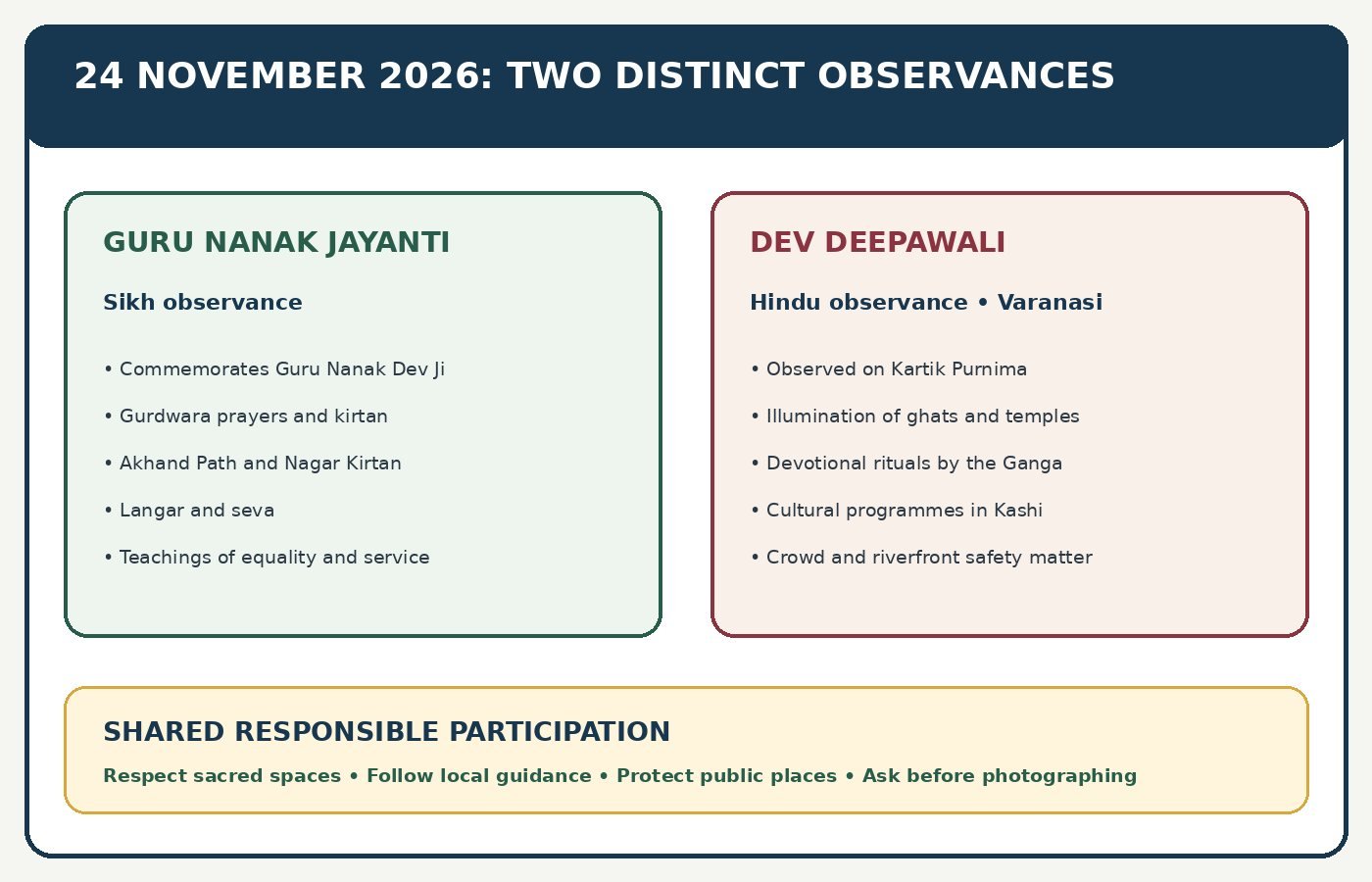
Gurdwaras may organise prayers, kirtan, religious discourses and readings from the Guru Granth Sahib. Some programmes include an Akhand Path, a continuous recitation of the scripture. Nagar Kirtan processions may take place in local areas. The exact programme varies by gurdwara and community.
Langar is an important part of the observance. It is a community meal served to people without distinction. Volunteers prepare food, serve visitors and clean the space. This service reflects the values of equality and shared responsibility.
What visitors can learn
- Naam Simran: Remembrance of the Divine is central to Sikh spiritual practice.
- Kirat Karni: Honest work and ethical living are important values.
- Vand Chhakna: Sharing with others expresses community responsibility.
- Seva: Selfless service is practised through voluntary work.
- Equality: Langar and shared participation express dignity for all people.
These concepts are often explained through Sikh teachings and community practice. Visitors should learn from gurdwara representatives and the Sikh community rather than relying only on brief festival summaries.
Dev Deepawali: Varanasi’s Festival of Lights
Dev Deepawali, also called Dev Diwali, is observed on Kartik Purnima. It is especially associated with Varanasi, also known as Kashi. The festival is linked with the belief that the gods descend to the city and the Ganga for the occasion. Ghats, temples and riverfront spaces are illuminated with lamps.
In 2026, Uttar Pradesh Tourism lists Dev Deepawali on 24 November. The celebration includes devotional activity and cultural programmes. Visitors often view the illuminated riverfront from the ghats or authorised boats on the Ganga.
Why the ghats are important
Varanasi’s ghats are part of the city’s religious and cultural life. They are used for prayer, bathing, rituals and community activity throughout the year. During Dev Deepawali, the lighting of lamps creates a special visual setting along the river. The riverfront is not only a visitor attraction. It remains a sacred and working public space for residents and worshippers.
What visitors may experience
- Rows of earthen lamps along ghats and temple areas.
- Devotional rituals and prayers near the river.
- Classical music, dance and other cultural programmes.
- Large gatherings of local residents, pilgrims and visitors.
- Views of the illuminated riverfront from authorised boat services.
Programme details and access arrangements can vary. Visitors should check current district and tourism advisories. Do not assume that every ghat or boat route will remain open to unrestricted access.
How the Two Observances Differ
Both observances may encourage reflection, community participation and care for others. Their religious foundations remain different. Clear explanations help readers understand each tradition with accuracy.
| Aspect | Guru Nanak Jayanti | Dev Deepawali |
|---|---|---|
| Religious tradition | Sikh | Hindu |
| What it marks | Birth anniversary of Guru Nanak Dev Ji | Kartik Purnima observance associated with Varanasi |
| Main setting | Gurdwaras and Sikh community gatherings | Ghats, temples and riverfront of Varanasi |
| Common practices | Kirtan, prayers, Akhand Path, Nagar Kirtan, langar and seva | Lighting of lamps, riverfront rituals, prayers and cultural programmes |
| Key themes | One God, equality, honest work and service | Devotion, Kartik Purnima and the sacred riverfront |
It is respectful to describe each observance on its own terms. Avoid treating the two festivals as one combined religious celebration. Shared values can be discussed without erasing their differences.
Visiting a Gurdwara Respectfully
Gurdwaras generally welcome visitors who follow their rules and respect the prayer environment. Local arrangements can vary. Check the gurdwara’s own guidance before attending a special programme.
- Cover your head before entering the prayer area.
- Remove footwear in the designated area.
- Dress modestly and maintain a respectful manner.
- Follow instructions from sevadars and gurdwara volunteers.
- Do not interrupt prayers or block the movement of the sangat.
- Ask before taking photographs or recording video.
- If you join langar, follow the seating and service arrangements.
Visitors who wish to help can ask whether volunteers are needed. Seva should be offered without seeking attention or disrupting the programme. Do not assume that every gurdwara has the same arrangements or schedule.
Planning a Visit to Dev Deepawali in Varanasi
Dev Deepawali can draw large crowds to the riverfront. Visitors should plan transport and access in advance. The district administration may issue special traffic plans, restrictions and safety instructions. Check current notices before travelling.
Before you travel
- Check the latest Varanasi district administration and Uttar Pradesh Tourism advisories.
- Confirm transport arrangements and any road closures.
- Use authorised boat operators and follow life-jacket instructions.
- Plan a meeting point if travelling with family or a group.
- Keep children close in crowded areas.
- Carry essential medicines and water where permitted.
During the celebration
- Keep pathways and emergency access routes clear.
- Follow crowd barriers and police instructions.
- Do not enter restricted riverfront or boat areas.
- Ask permission before photographing worshippers.
- Use waste bins and avoid littering near the river.
- Do not light lamps in places where local rules prohibit it.
Visitors should remember that the ghats serve residents and worshippers throughout the year. Respect local access and avoid blocking religious activity for photographs. Choose authorised services and follow safety instructions.
Culture, Tourism and Community Care
Large observances can support local livelihoods. Transport workers, guides, artisans, food vendors and hospitality businesses may receive more visitors. Cultural programmes can also create work for artists and local service providers.
However, large gatherings can place pressure on roads, sanitation, water supply and emergency services. Good planning should balance visitor access with residents’ needs. Clear signage, accessible routes, waste collection and crowd information can make the experience safer.
Local organisations can help visitors understand the history of a place. They can also support responsible tourism and protect community traditions. Tourism should not reduce sacred spaces to photo locations. It should help preserve the places and practices that give festivals meaning.
Environmental Responsibility
Riverfront festivals need careful waste management. Visitors can avoid plastic litter and use public bins. They should follow local rules for lamps, offerings and boat services. Waste should never be thrown into the river.
Community groups and event organisers can support clean-up work and public awareness. They can provide clear waste points and accessible facilities. Respect for the river and public spaces protects residents, worshippers and visitors alike.
MASA World Editorial Insight & Community Guidance
Festivals are living traditions, not only dates or photographs. Learn their histories from community sources. Participate with humility. Respect the differences between faiths. Protect shared public spaces. Responsible curiosity can build understanding without erasing the identity of each tradition.
MASA World encourages families, schools and community organisations to use this shared date as a learning opportunity. Children can learn about Sikh history, Guru Nanak’s teachings and the importance of seva. They can also learn about Kartik Purnima and the cultural life of Varanasi.
Good cultural understanding begins with listening. Ask questions politely. Follow local guidance. Do not make assumptions about rituals. Respect the people who practise each tradition. This approach helps preserve both heritage and community dignity.
Frequently Asked Questions
1. When is Guru Nanak Jayanti in 2026?
The Government of India holiday calendar lists Guru Nanak’s Birthday on Tuesday, 24 November 2026.
2. When is Dev Deepawali in Varanasi in 2026?
Uttar Pradesh Tourism lists Dev Deepawali on 24 November 2026, which is Kartik Purnima.
3. Are Guru Nanak Jayanti and Dev Deepawali the same festival?
No. Guru Nanak Jayanti is a Sikh observance marking the birth anniversary of Guru Nanak Dev Ji. Dev Deepawali is a Hindu observance associated with Kartik Purnima and Varanasi.
4. Can visitors attend Guru Nanak Jayanti celebrations at a gurdwara?
Visitors are generally welcome when they follow the gurdwara’s rules and respect prayer and service activities. Local instructions should always be followed.
5. What should visitors know before going to Dev Deepawali in Varanasi?
Check current traffic, crowd-management and riverfront access notices. Plan transport early and follow official safety instructions.
Official References
- Government of India: 2026 holiday list — Guru Nanak’s Birthday, 24 November.
- Incredible India: Guru Nanak Jayanti — date and traditions.
- Incredible India / Uttar Pradesh Tourism: Dev Deepawali in Varanasi — 24 November 2026.
- Shiromani Gurdwara Parbandhak Committee: Gurpurab observances.
- SGPC: Sikh Rehat Maryada — Sikh code of conduct.
Editorial note: The 2026 dates are based on the Government of India holiday list and Incredible India / Uttar Pradesh Tourism listings. Local programmes, traffic plans and access arrangements may change. Check the relevant gurdwara, temple and district administration before visiting.