
How to Verify Government Job Notifications in India: A Safe Application Checklist
Government job notifications can open important career opportunities, but a forwarded PDF, social-media post or messaging-group alert is not proof that a vacancy is genuine. Before sharing documents, paying an application fee or submitting a form, verify the recruitment directly with the organisation responsible for it.
This MASA World guide gives jobseekers a repeatable process to check an Indian government recruitment notice, understand the key details and avoid common fraud attempts. It does not announce a live vacancy; always use the latest official advertisement for the recruitment you are considering.
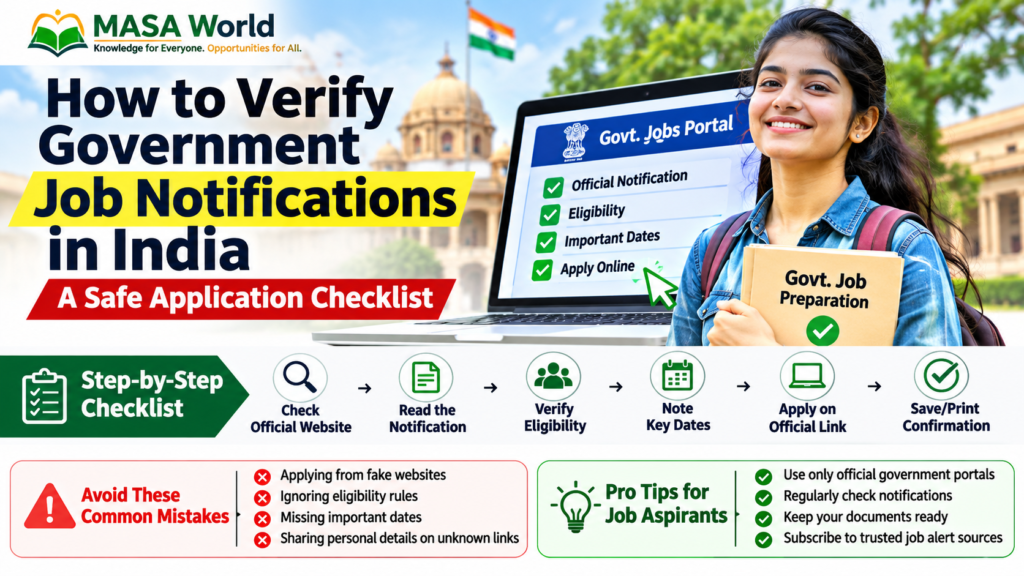
At a glance: the six checks
- Open the recruiting organisation’s official website yourself.
- Find the original advertisement and note its number and date.
- Match the post, vacancies, eligibility and reservation conditions.
- Verify application dates, fee rules and payment instructions.
- Apply only through the official application portal named in the notice.
- Save the submitted form, payment receipt (if applicable) and confirmation.
Why verification matters
Recruitment information is frequently copied, shortened or reposted without the original context. Old notices may circulate after a deadline, unofficial pages may change application links, and fraudsters may imitate the names or logos of public bodies. A genuine-looking design does not establish authenticity. The recruiting authority’s own website and the original notification are the primary sources.
1. Find the official recruitment source
Start with the website of the organisation named as the recruiter—not a search advertisement, forwarded link or third-party job page. Type the known official address into your browser or reach it through a trusted government directory. Look for sections labelled Recruitment, Careers, Vacancies, Notices or Advertisement.
Useful official starting points include:
- Union Public Service Commission (UPSC) — examination notices, recruitment advertisements and vacancy circulars.
- National Career Service (NCS) — a Ministry of Labour & Employment portal with jobseeker services and links to government recruitment portals.
- NCS: Government Job Vacancies — a directory of recruitment links for ministries and public authorities. Follow the link onward and confirm the notice on the recruiting body’s own website.
For a UPSC recruitment, the Commission explains that vacancies are advertised on its website and that online applications are made through its designated application website. Read the specific advertisement for the correct application route.
2. Read the original notification—not just the headline
Download the complete official PDF or web notice. Check the advertisement number, issuing authority, publication date, post name, number of vacancies, location and any corrigendum or addendum. A short social-media summary may omit important conditions or later changes.
Compare the copy you received with the file hosted on the recruiting authority’s website. If the notice cannot be found there, do not treat it as confirmed. Contact the authority using contact details published on its official website.
3. Check eligibility carefully
Read every eligibility condition before beginning an application. Depending on the post, this may include:
- Essential educational qualification, subject and recognised institution requirements.
- Age limit and the date on which age is calculated.
- Category-based relaxations and required certificates.
- Work experience, professional registration, physical standards or language requirements.
- Nationality, domicile or other post-specific conditions.
Do not assume that a relaxation applies automatically. Check the exact wording and required proof in the current notification. If a condition is unclear, seek clarification from the recruiting authority before submitting the form.
4. Verify dates, fees and payment instructions
Record the application opening date, closing date, fee-payment deadline, correction window, examination date (if announced) and document-submission deadlines. Check the official website again before acting because authorities may issue corrigenda or revised schedules.
Fees vary by recruitment and applicant category. Do not rely on a message that asks you to transfer money to a personal bank account, wallet or QR code. Use only the payment method described on the official application portal. Keep the transaction reference and receipt.
5. Apply through the official link and keep proof
Reach the application form from the recruiting authority’s official notice. Check the domain carefully before entering personal information. Complete the form using details that match your documents, upload files in the required format and review the declaration before final submission.
After submission, download or print the application confirmation. Keep a copy of the final form, registration or application number, fee receipt (if applicable) and relevant notice. Monitor the official website for admit cards, exam instructions, results and further notices.
6. Recognise fake job alerts and recruitment scams
Be especially cautious if someone promises guaranteed selection, asks for money to influence an appointment, requests an OTP or password, or insists that you apply through an unofficial link. Do not share sensitive identity or banking details with unknown callers or websites.
The National Career Service explicitly warns that some websites and individuals falsely claim an association with NCS or use its logo. NCS states that its services are free at every stage of registration, job application and interview processing. It advises users to verify suspicious communications through its official support channels, including helpline 1514. This warning applies to claims about NCS; always check the fee rules of the actual recruiting authority for other recruitments.
Your pre-application checklist
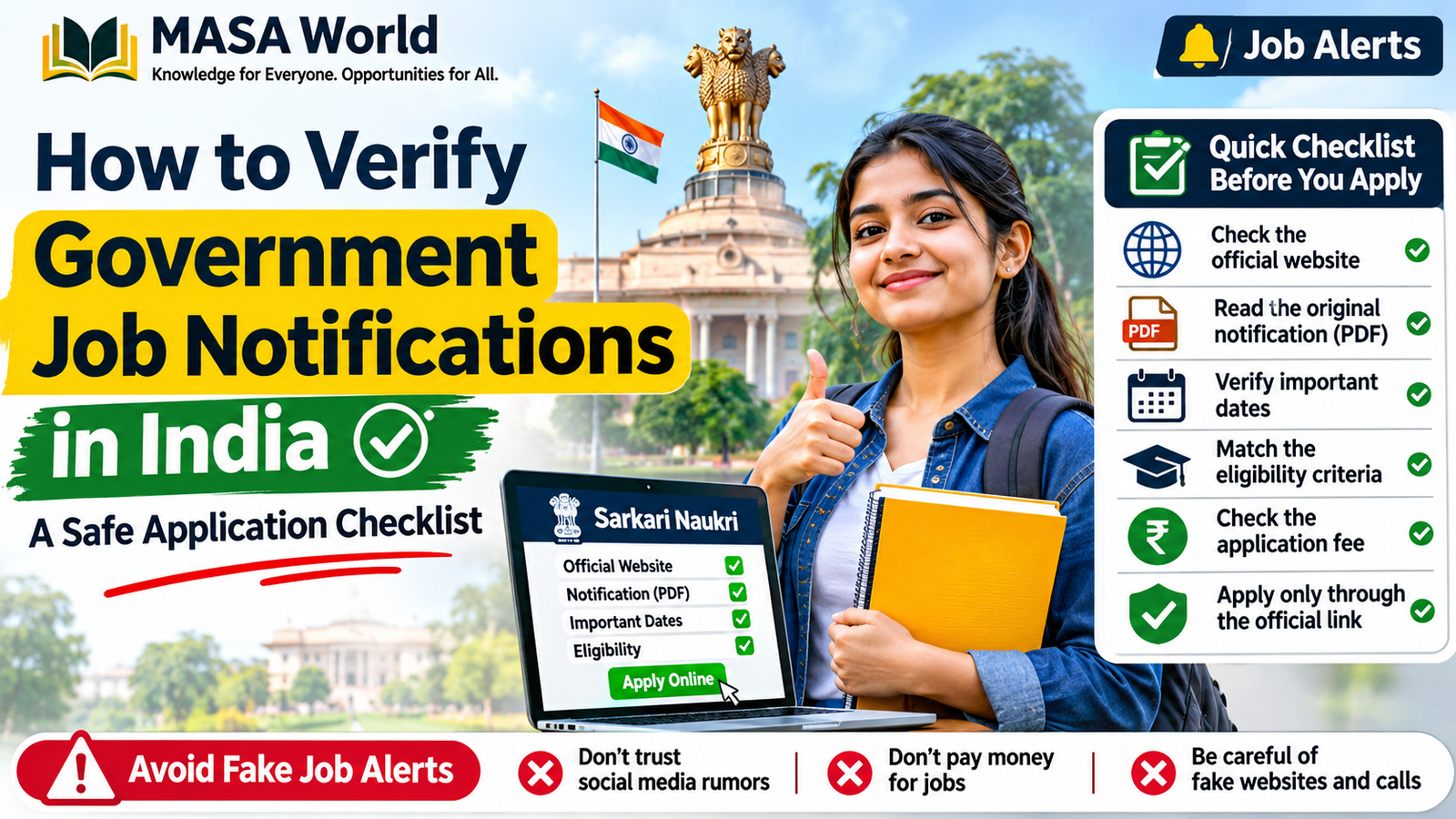
- I found the notice on the recruiting authority’s official website.
- I checked the advertisement number and latest corrigenda.
- I meet the stated qualification, age and other eligibility conditions.
- I noted the correct deadlines and fee rules.
- The application link is the one named in the official notice.
- I saved my final application and acknowledgement.
MASA World Editorial Insight & Community Guidance
Jobseekers should treat every alert as a lead to investigate—not as an instruction to pay or apply immediately. Families, teachers and community organisations can help young applicants by checking the original notice together, explaining eligibility in plain language and discouraging payments to agents who promise selection. Share the official recruitment page rather than an unverified screenshot.
Frequently asked questions
Is a government job alert on WhatsApp or social media reliable?
Not by itself. Verify the advertisement on the recruiting organisation’s official website and check for later corrections.
Can an agent guarantee selection in a government recruitment?
A promise of guaranteed selection in exchange for money is a serious warning sign. Follow only the official recruitment and selection process.
Does the National Career Service charge jobseekers?
NCS says its services are free at every stage of registration, job application and interview processing. For a different recruiting authority, read that authority’s official fee instructions.
What should I do if I suspect a fake NCS message?
Use the contact information on the official NCS website to verify the communication. NCS lists helpline 1514 and support email support@ncs.gov.in.
Where can I check UPSC recruitment advertisements?
Use the official UPSC website and its Recruitment section. Follow the application instructions in the relevant advertisement.
Official references
- National Career Service — Ministry of Labour & Employment, Government of India.
- NCS Government Job Vacancies directory.
- Union Public Service Commission — official website.
- UPSC Recruitment Division — recruitment and application information.
Editorial note: Information checked on 11 November 2026. This is a general educational guide, not a live vacancy announcement or legal advice. Recruitment rules, dates, fees and links can change; the latest official notification and any subsequent corrigendum take precedence.